




The OPP says THC content has varied wildly in cannabis that was recently seized and tested by the National Research Council of Canada.
While the majority of the illegal samples did not advertise THC levels on the packaging, some samples claimed to have THC content greater than 90%, actually measured values from 45% to 60% per cent.
They say the lab also found a variety of pesticides, which could be problematic for a person’s health.
Over the last two years, the OPP-led Provincial Joint Forces Cannabis Enforcement Team’s focus has been to remove unsafe, illegal cannabis from communities.
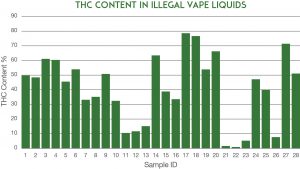
Based on test results from the National Research Council of Canada (NRC), the graph above shows the varied levels of delta-9-tetrahydrocannabinol (THC) content in the seized illegal cannabis vape samples tested, ranging from less than one per cent to almost 80%.
In addition to the greater risk of harmful fillers and contaminants with low THC content, this research shows your weed dealer may not be giving you the potency you expect.
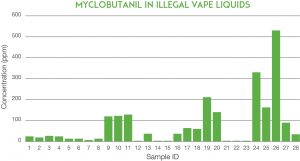
As seen in the graph above, myclobutanil was present in all of the samples with concentrations greater than the Health Canada limit.
Other pesticides were also detected such as metalaxyl, chlorpyrfos, and pyridaben, in some cases at levels 100 times higher than listed limits.
High levels of pesticide residue present significant health complications for cannabis consumers.
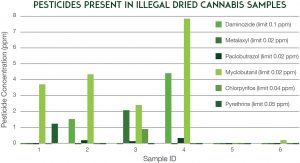
These pesticides are not only harmful to consumers, they could also pose a risk to the surrounding communities.
“The OPP remains committed to unmasking the threats inherent with criminal cannabis. We will continue work with our various partners to expose the health and public safety risks related to the illegal market. The test results are clear evidence that consumers don’t know what they’re getting when they purchase illegal cannabis products and how important it is to know the facts,” says Rachel Huggins, OPP Deputy Director, Executive Lead – Cannabis Legislation.






